The Plastic Free Communities Impact Report: ‘Remarkable’ grassroots action is turning the tide on plastic pollution

  • Plastic Free Chester joins 831 communities in the UK successfully tackling single use plastic
  • An estimated 29.4 million people in the UK live in a community working on the campaign
  • Plastic is being reduced at an estimated rate of 43 million items per year, 67% of which is directly attributable to the campaign
  • 4,590 businesses are enrolled, driving 90% of plastic reduction
  • 230 councils have resolved to reduce plastic usage and support plastic free initiatives
  • An estimated 16,620 people volunteer for the campaign

Having achieved Plastic Free Chester in 2018 although we will review this, we are now supporting the region to achieve Plastic Free Cheshire and we are calling on the community to get behind this local campaign, after a report revealed the nationwide movement is greatly benefiting communities and significantly reducing the reliance on single-use plastics by those involved.

For the first time since its launch, Surfers Against Sewage ( SAS) have delved into the movement to reveal its impact on plastic pollution and how it benefits the communities taking part.

Almost 30 million people across the UK now live in a Surfers Against Sewage (SAS) Plastic Free Community, removing millions of items of plastic pollution every year and tackling the brands and businesses behind it.

Plastic Free Communities is a grassroots campaign that empowers and connects people in a shared journey to free where they live from avoidable, throwaway plastic; from beaches, rivers and green spaces, all the way back to the brands and businesses who create it. They do this through a five-step toolkit to engage with individuals, businesses, schools, councils and other community organisations.

Insley Consulting Ltd undertook an independent evaluation of the campaign in 2021, including the amount of plastic that has been reduced as a result. The ‘Plastic Free Communities: Freeing Where We Live from Single Use Plastic’ report pulls out key stats from the evaluation and looks at the future for the cornerstone SAS campaign.

Headlines

The research found that Plastic Free Communities are eliminating an estimated 43.3 million single use plastic items per year. 29 million of those items are directly attributable to the campaign. It’s estimated that you could fill a 25-metre swimming pool 14 times by the number of plastic cups and drinks bottles eliminated.

Businesses drove 90% of this plastic reduction and as a result it’s thought the plastic reduction figures may be an under-estimation, given only a proportion of Business Champions responded to the research survey.

“It’s made us think about the single-use items we have in our shop. I thought we were doing well already, and we were, but then listing them out to see what we have has highlighted many more very easy swaps that we can and have since made.”

Survey respondent

Overall, respondents reported a 94% reduction in single-use items they chose to tackle.But the pandemic has without doubt been a challenge, for all involved in the campaign. 47% of individuals and 33% of businesses increased the amount of single-use plastics due to Covid-19; largely because there was no choice in packaging, particularly when shopping online, using PPE for work or in Covid testing kits.

Wider Impact

The campaign has also sparked a wave of new environment and sustainability initiatives across the UK, with 80% of respondents saying they are more aware of local and global environmental issues. Plastic Free Communities were the biggest SAS volunteer cohort to take part in the Brand Audit, submitting evidence of plastic pollution where they live to put pressure on government and industry.

100 communities also collected evidence of plastic pollution as a result of Covid-19 for a research paper from National Geographic and The University of Plymouth, due out this Spring.

There is good evidence the campaign is having a positive impact on community cohesion too. People involved have a greater sense of feeling like they belong in their neighbourhood, 80% said they felt more connected to nature and their local environment, and they are considerably more likely to spend time outdoors than the population in general.

There is also some evidence that the campaign contributes towards a healthy local economy, with

95% of respondents saying they make an effort to use local businesses, and 90% preferring to use businesses who have taken action on becoming plastic free.

Evaluator Emma Insley said:

“Plastic Free Communities have done incredibly well to achieve an excellent environmental and social impact, particularly in the wake of lockdown restrictions due to the Covid-19 pandemic; it is a remarkable campaign delivered by dedicated local and national environmental activists.”

SAS CEO Hugo Tagholm said:

“I’m so proud of the impact Plastic Free Communities have helped deliver. Whether on the coastline or inland, they truly have delivered Ocean Activism everywhere. We are more than surfers. We are a nationwide community of people driving environmental action through the prism of plastic. Whilst Covid-19 might have brought a new wave of single-use plastic with it in the form of PPE and lateral flow tests, the response has been such an inspiration. Rather than capitulate, our volunteer leads have innovated, re-engineered and mobilised to ensure that we continue to free communities from the scourge of single-use thinking.”

Plastic Free Cheshire is calling on local businesses, schools, groups and families to get involved. Community Leads Christian Dunn & Helen Tandy said, having achieved status for Chester we now want to support other regions in Cheshire and build on what we have learnt over the last 3 years.

You can read the full Plastic Free Communities: Freeing where we live from single-use’ report here

Which region in the England is the most sustainable?

It’s nearly half way through February and so so much is being planned for the region this year, it’s definitely looking like the year Cheshire moves right up that list of Sustainable regions on the heels of those shown in research by Thriving Places. In 2021 the report gave the top spot to Salford which surprised me, expected to see Bristol or Oxford but great news for the North West. 

The Sustainability element of it’s scoring is a combined score taking account of Energy Use, Waste, and Green Infrastructure. These look at whether Local Conditions are delivered without negatively impacting the environment. Higher scores indicate better Sustainability, relative to how England is doing on average.

Salford region was top with a score of 6.71, Manchester – 6.19, where Cheshire West scored only 4.39 which is below the average of 5.5 in England. Cheshire West is however working on lots of future project with these regions and so hopefully we will see some changes. A good one to keep an eye on.

It also looks at more than just sustainability – if you want to see more you can read more on the website. – CLICK HERE

So many projects are going on to help the region. The list is huge but just some that we are supporting or will be involved in are the Green EXPO in June by CHASE, Festival for our Future by Cheshire West Museums in July, Great Big Green Week in September we will be promoting the regions activities and of course our Great Big Green Week Festival will be back in Grosvenor Park – so it’s all very exciting. 

This November’s Conference of the Parties (COP) is critical for the future of our planet but why?

By Helen Tandy

I have been campaigning for almost as long as the UN have spoken about the climate yet little progress has been made. This year’s COP will be the most significant yet, being widely thought of as the last chance for world leaders to commit to action on climate change before we reach the 2030 deadline.

2021 marks the 26th year of the conference, with last year’s meeting being postponed due to Covid. You will see reference to COP26 on social media.

With more than 20,000 delegates from 197 countries attending the event in Glasgow, along with 120 heads of state at the main event. But, Glasgow will also host lots of fringe events that anyone can get involved in, which will further increase the number of visitors to the city.

Information on the Climate Fringe COP26 – https://climatefringe.org/events-calendar/

Holyrood COP26 Fringe Festival – https://events.holyrood.com/event/cop26fringe/

You will have noticed a huge increase in the press and online about Climate Change and we can all get involved in some way.

 What is The Paris Agreement?

Agreed at COP21, The Paris Agreement is an international treaty signed by almost all countries in the world, in Paris in 2015. It’s aim was to keep the rise in the global average temperature to ‘well below’ 2 degrees above pre-industrial levels, ideally 1.5 degrees.                                                              

What does COP26 aim to achieve and why is it important?

COP26 is a critical summit for global climate action. To have a chance of limiting warming to 1.5 degrees, global emissions must halve by 2030 and reach ‘net-zero’ by 2050.

Their role is to come up with a viable plan that will protect humans, animals and nature from a climate catastrophe of unknown scale but of certain devastation.

This year’s COP is important because it is the year that all countries will reflect on how well they’ve achieved these aims, as well as submit their long-term goals.

Sadly, the commitments laid out in Paris did not come close to limiting global warming to 1.5 degrees – meaning the years approaching 2030 will be crucial.

With COP26, countries must go much further than they did in order to keep the hope of holding temperature rises to 1.5 alive.

What can I do in the run up to COP26?

1 – Read more about the issues, we have worked a lot with The Climate Coalition and they have some great resources. LINK

The Climate Coalitions 10 Point Plan – READ

2- Join our Carbon Footprint Friends Project and make changes to how you live – JOIN

3- Join a Campaign Group, Climate Action Chester & District is a group of members of Friends of the Earth Chester & District – MORE INFO

4- Attend one of the events under What’s on.

Carbon Footprint Steps in Cheshire

Giki is an online personal guide to calculate, track and reduce your environmental footprint. Our Great Big Green Week Festival linked the principles of Giki in its core message. As Giki is online our Carbon Footprint Friends project brought it to the physical out of the virtual. The Children had great fun checking out the nature activities and answering questions linked backed to our stalls.

Next Step

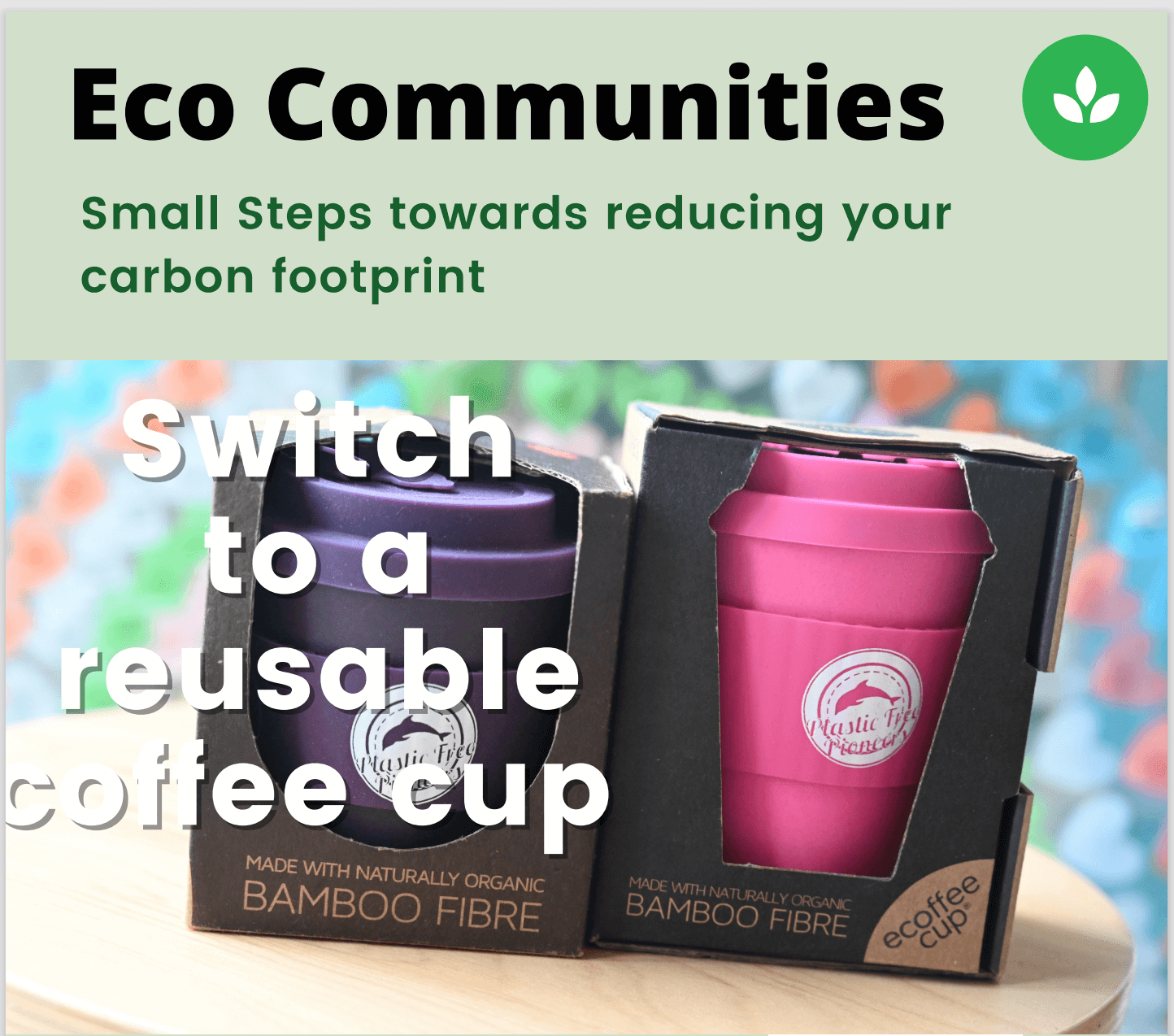
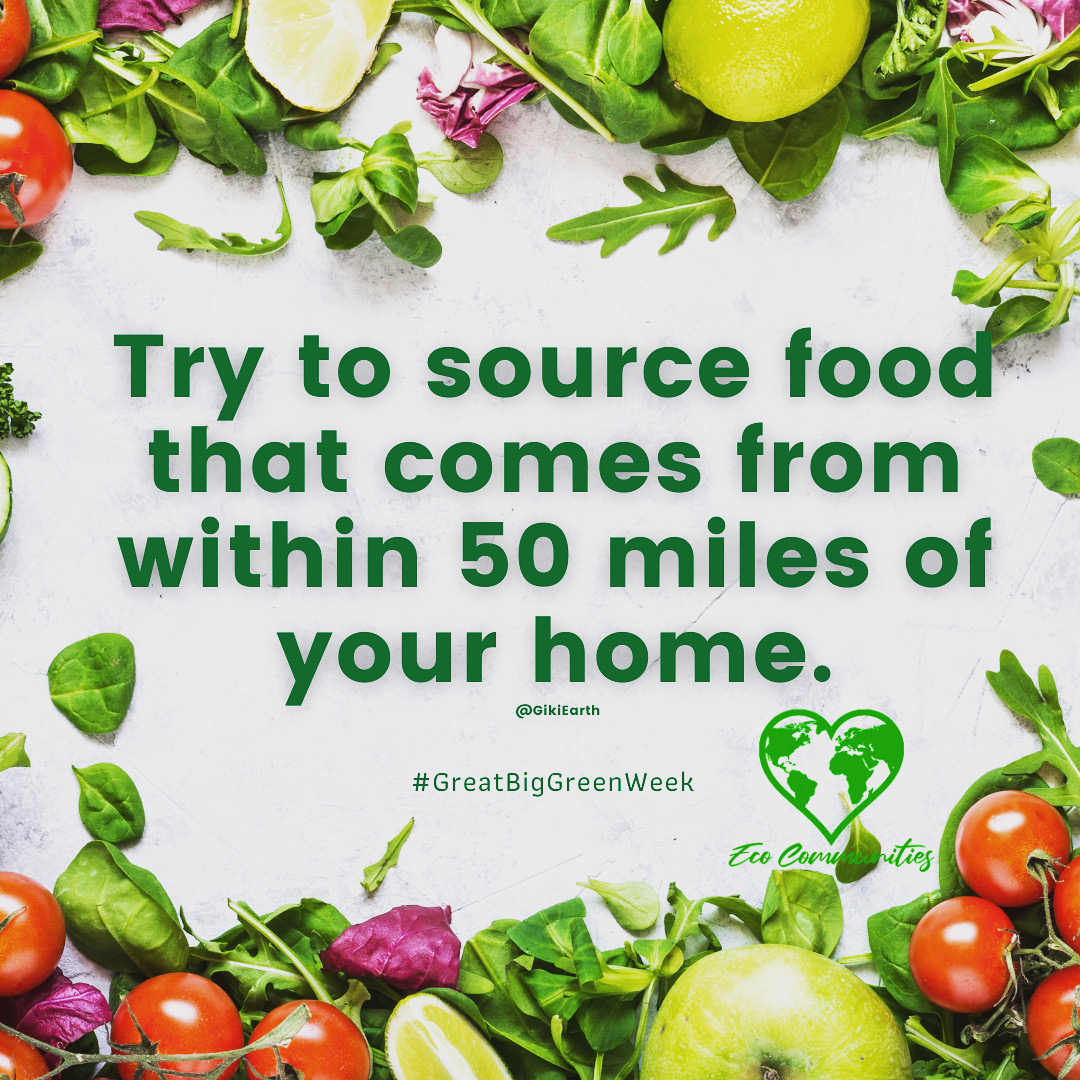
We’ve turned some of these steps into posters and are now looking to work with businesses in Chester to help residents complete the stamp cards.

Example e.g. have a vegan lunch – vegan cafes and restaurants might want to take part. Buy Fairtrade, link to shop in Chester selling Fairtrade. All that businesses will need to cover is the cost of the stamp at £15 each.

See example of stamp sheet….

Read our latest Eco Communications – Giki magazine

Why should I sign up to Giki?

We encourage you to sign up to Giki as part of our Eco Communities account.

Once you’ve signed up, Giki will ask a few simple lifestyle questions to get you started. Answering these questions gives you an initial estimate of your carbon footprint which you can track on your Progress page. This is the “go to” page for all your headline personalised information where you can see how your carbon footprint shapes up and what your Giki score is.

Find the right steps for your lifestyle and budget

These steps will help lighten your footprint on the planet. Choose from over 130 steps, that you can choose based on areas of your lifestyle, ease and impact. Tick off the steps when you complete them to boost your Giki score and update your footprint to see how much carbon you’ve cut.

You can even choose to join one of the many teams and work with your neighbours or community group together.

Join our Carbon Footprint Friends project..

Lets work together to take steps to reduce our carbon footprint.

Have a look at ‘Select Team’ if you have a specific group you want to join. If you are on a mobile or tablet, you might need to select the three dots to see this option.

What is a Carbon Footprint?

A personal carbon footprint measures the greenhouse gases which are emitted as a result of the activities of an individual.

Typically it’s measured in kilograms or tonnes of carbon dioxide ‘equivalents’. This is because whilst carbon dioxide is the main greenhouses gas it also needs to include other gases such as methane and nitrous oxide which have much greater global warming potential.

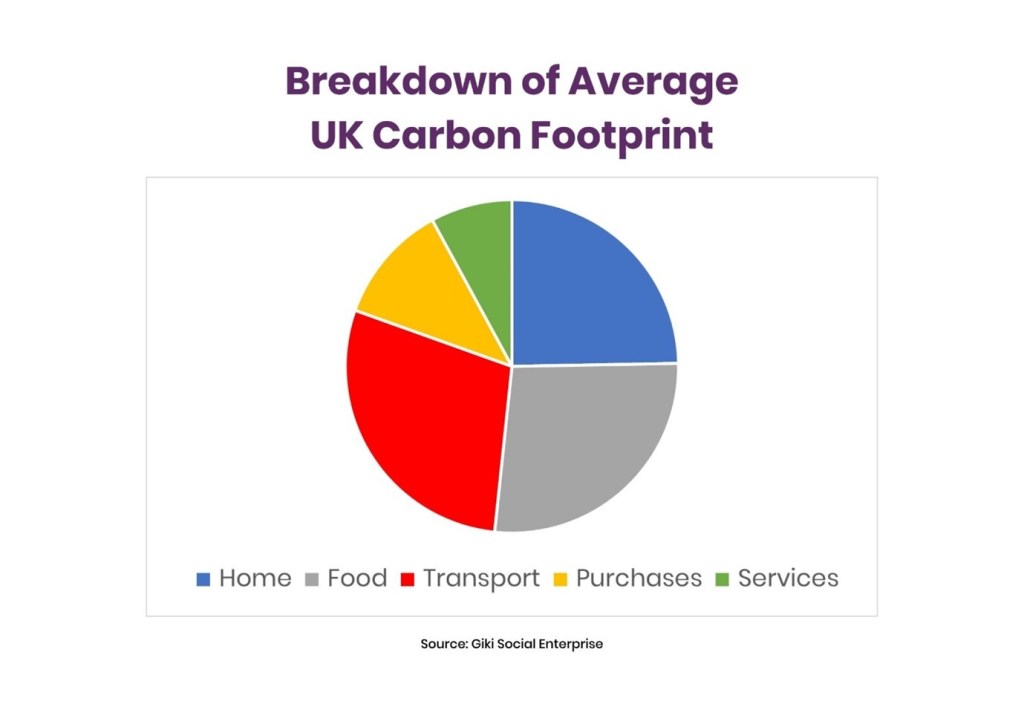
The activities that a carbon footprint covers are broad, because so many of our day to day activities lead to greenhouse gas emissions. They can be split out into 5 main areas:

  • Running a home which includes heating, electricity and waste.
  • Transport because when we drive, fly or use other transport fossil fuels are often burnt.
  • What we eat, drink and any food we waste.
  • What we buy from clothes to electrical items to personal care.
  • The services we use which includes how we invest, where we stay on holiday and our mobile and internet.

Adding these all up the average global carbon footprint for an individual is around 5 tonnes but it’s 9 tonnes in the UK, over 15 tonnes in the United States and under 2 tonnes in India. Whilst the majority of a carbon footprint is carbon dioxide the food we eat often adds methane (from livestock) and nitrous oxide (from fertilizer) to the total.

What is my Carbon Footprint?

Everyone’s carbon footprint is different. Sometimes a little bit but often a lot with the richest 10% having an average carbon footprint over 20 tonnes whilst the poorest 50% are under 1 tonne. The one thing we do know is that people with higher footprints needs to dramatically cut them over the next 10 years with an aim to hit 2.5 tonnes, or less, by 2030. Ideally people would reach Net Zero (where any emissions we do create are balanced by removing carbon dioxide from the atmosphere) at the same time or as soon as possible after that.

The carbon footprint for an average UK person is shown in the chart. Normally our homes, what we eat and how we get around are the largest contributors making up roughly a quarter each. However, before decide how to reduce our carbon footprints it’s important to get a more personalised estimate to make sure we’re looking in the right places for the big cuts. This is where personal carbon footprint calculators come in.