Uncover the Mystery of the Green Tickets in Chester.

— keep your eyes peeled – tickets mean prizes

Helen Tandy, Director

While the Chester Green Weekend ‘Green Tickets’ might not grant you access to a tour of a fantastical chocolate factory, it may well net recipients one of a range of exciting gifts.

Keep an eye out for the flash of a green ticket across the city centre from the 11th May throughout the weeks leading up to the Chester Green Weekend on 15th and 16th June. Clues will also be put out on the event’s social media channels so keep your eyes peeled — @chestergreenweekend.

If you’re lucky enough to find one, all you must do is put your details on the back and return it to a member of the Chester Green Weekend team at the event held at Grosvenor Park on the 15th and 16th June. Everybody who brings a ticket will receive an eco-gift— while also being added to the final prize draw. The draw offers a wide range of prizes, from the likes of Chester Zoo, Chester Racecourse, Chester BID, The Townhouse, Oh design Foundation, New Chester Market and more. So, keep your eyes peeled if you’re around Chester this June. Even if you don’t find a Green Ticket you still have a chance to enter the draw, we will also be picking 20 booked ticket holders from the first 25% of bookings, so book early for an extra chance to be entered into the draw – book now…

Chester Green Weekend is part of a national event programme Great Big Green Week which runs from the 8th to the 16th of June with thousands of events around the UK.

What is Chester Green Weekend?

Helen Tandy from Eco Communities, the organiser of the event in Chester said “We have been involved in Great Big Green Week since it started in 2020. As part of the week-long celebration, we will be hosting a number of activities throughout the week, culminating in a big celebration in the city over the weekend called Chester Green Weekend. We want to show Chester as a leading sustainable hotspot in the Northwest, as well as bring residents of our city on a journey with us; empowering them to make minor changes today to support a brighter tomorrow.”

The event will be free of charge, so if you’re in the area, you can get involved with the wide variety of activities, workshops, walks, stalls, food, and entertainment taking place throughout the city. With Cheshire West Libraries, Picturehouse, Chester Cathedral, Storyhouse, and New Chester Market all supporting the initiative, there will be all sorts to get involved with. Don’t miss out!

Tim Kenney from Chester Great and Small (Chester GAS), told us why it is so important for Chester to hold this event : “Chester GAS is all about smarter and more collaborative working to deliver a better Chester City in every discipline . We want to shine the light on Chester with a focus & future vision of Sustainability and felt this new Chester Green Weekend would be a fantastic way to do that. It has come from a collaboration with a number of Chester Great and Small’s ambassadors, all of whom are responsible for various sustainable activities in the region, including AT Fest, Green Expo, Sustainable Cheshire Fair (Eco Communities) and the Oh design Foundation, with the fantastic help of We love Good Times and Reasonably Good and others . Hopefully it demonstrates what can be done when you work together “.

Keep an eye out as you walk, shop, eat, and drink in Chester from now until Chester Green Weekend, for your chance to win an exciting prize.

Chester Green Weekend takes place in Grosvenor Park and Chester City Centre throughout the weekend of 15th and 16th June.

For more information see chestergreenweekend.co.uk

Happy Ticket hunting….
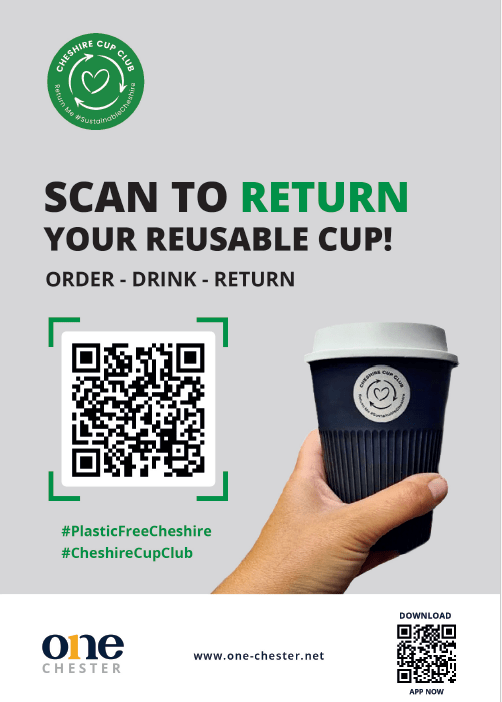
Chesters first returnable cup scheme works with Chester based Loyalty Pro to take the scheme into the digital world.

Helen Tandy, Founding Director, Eco Communuties

We launched our returnable coffee cup scheme into Chester nearly a year ago, May 2023 to try to reduce the amount of single use cup waste and litter in the city.

Fifteen local cafes support the scheme, but operation and monitoring have presented some challenges. The team approached local tech company (and fellow GAS ambassadors) Loyalty Pro to see if they had any ideas of how they could improve the scheme by simplifying the processes with new technology.  

The Loyalty Pro team have been able to incorporate all the participating cafés into it’s recently launched One Chester App and are now trialling a new way of handling cup usage at the Green Day Café in Westminster Park.

Rob Meakin, MD of Loyalty Pro and architect of the One-Chester App commented: “We were pleased to lend a hand to a fellow not for profit to help the team, the One-Chester app has the ability to record visits to retail sites in the city via the use of QR codes. We tweaked this to handle the issue and return of cups from the cafés to make the whole process simpler for both cup users and café owners. Plus, there’s the added benefit of providing valuable statistics on the usage to the sustainable cup scheme. Replacing the plastic token although made from recycled fishing nets, with the app removes a little more plastic from circulation – every little helps!”

The One-Chester app is free to all and available to download from www.one-chester.net

The Green Day Café opened and quickly joined the Cheshire Cup Club family of cafes allowing families to take hot drinks outside in returnable cups saving waste. The café then washes the cups and put that back into circulation for the next person. Ken from Green Day Café ha agreed to support the next phase of the cup scheme through the trial. The idea is to use the One Chester App to replace the tokens currently part of the scheme. If this is succesful we will roll thi our to all our Chester venues.

How does it work?

You join Cup Club for £2.50 which gives you unlimited use of the cups available in the participating cafes. All you need to do is join, get your coffee (or any hot drink of course) in one of the returnable cups and when empty drop it to any of the cafes in the scheme who will wash it and reuse it for the next customer. It’s estimated that 94% of us own a reusable cup but don’t carry it with us – no need – the Cheshire Cup is ready to use when you need that take away coffee to get you through the day. The concept is a true circular one, borrow, use and return.

Support Cheshire Cup Club £2.50 donation to become a member. – JOIN NOW

You can join is via LINK, via the One Chester App or via any participating café.

For a list of all cafes download the One Chester App today from and check out trails..

All about Reusable Nappies (Plastic Free News)

As Reusable Nappy Week comes to an end Lizzie has been out and about this week talking to people at Neston Earth Festival and Storyhouse reminding people of the plastic in single use nappies and what the alternatives are. We caught up with Lizzie to get the low down on Reusable Nappies

Hi, I’m Lizzie. I set up Lizzie’s Real Nappies way back in 2003, soon after we discovered reusable nappies for our second daughter. When buying nappies myself, I found that there was no-one selling real nappies in the local area. Advice is available on the internet, but I feel that it’s important to see and feel the nappies before buying them. I also wanted to be able to speak, one-to-one, with someone who could advise me on the right nappies for me and my baby.

At Lizzie’s Real Nappies I, therefore, not only sell nappies, but also act as a source of information for parents who:

  • are just starting to consider using real nappies and are looking for honest, straightforward, practical advice.
  • need guidance on which specific nappies are best for them in terms of fit, practicalities and budget.
  • Have already purchased their nappies but may have questions or teething problems.

What are real nappies?

Modern real nappies are a world away from traditional terry squares with pins and plastic over-pants. They are shaped like disposables and elasticated at the waist and legs for a really snug fit. They consist of an absorbent core (usually cotton, organic cotton, microfibre or bamboo) with a soft waterproof outer layer to prevent leaks. The size is then adjusted using poppers or velcro.

Properly fitted, they tend to leak less than disposables and won’t need changing much more often. They come in a variety of colours and look super cute! Unlike disposables, real nappies are not thrown away after each use; they are washed and used again. They are therefore a great way of cutting down on single-use disposable nappies.

Why should I use them?

  • Real nappies are washed and used again; they, therefore, cut down on the amount of waste sent to landfill. The average baby uses around 7 single-use disposable nappies per day – that’s around 5000-6000 nappies used before they reach potty training! Typical disposable nappies will take around 400-500 years to break down within landfill sites. They say that if Henry VIII had worn disposable nappies, they’d still be in the ground now!
  • Unlike disposables, real nappies give you control over the chemicals in contact with baby’s skin.
  • They save you money. This can be £100’s depending on the brands used.
  • They come in some beautiful designs.

How does the nappy system work?

The nappies are put on baby much like a disposable. While disposables have sticky tabs, most real nappies are held in place with either velcro or poppers.

Between the nappy and baby’s bum you place a ‘liner’; this is very thin and protects the nappy from the poo. Poo is then flushed down the toilet (if solid) and the liner is placed in the bin (as you would a disposable nappy). The nappy is then ready for washing.

Used nappies are stored in a lidded nappy bucket before washing. They are stored dry; they do not need soaking. Bleaches or chemical soaking solutions are not required.

How do I wash and dry the nappies?

Nappies are washed at 40-60º and should be given a good long wash to ensure that they are fully clean, and all the detergent has been rinsed out. Use standard non-biological washing powder but avoid fabric softener as it reduces the absorbency of the nappies. Nappies should be dried on the line; this is the cheapest method, plus sunlight will naturally bleach them, helping to maintain their whiteness. Tumble dryers make the process quick and easy, but they do use a lot of electricity. When outdoor drying is not possible, a more cost effective, and ‘green’, alternative is to dry on an airer.

Will they fit my baby?

The nappies are fastened using either velcro or poppers. Each of these options allows for flexibility in the shape of the nappy, so whether your baby is chubby or slim, long or short, you will find that the nappy can be adjusted to suit.

Most nappies fit from around 10-35lbs (4.5-16kg). For most babies, this will be a few weeks after birth, up until potty training. Tiny newborn nappies are available, but parents generally opt for disposables nappies in the first few weeks, to keep things as simple as possible while they get used to little one.

How many nappies will I need?

If using cloth nappies full time, babies will need around 16-20 nappies. Many parents, however, opt to use them part-time initially – maybe cloth when at home, and disposables at night time and when out and about. You can increase the number of nappies you use per day as your confidence increases.

Nowadays most people opt for ‘One-size’ nappies. These are intended for use from birth to potty (around 4.5-16kg), so you’ll only need to buy one set. If you look after your nappies you should be able to use them again on younger siblings.

How much will they cost?

You can kit yourself out, including all the necessary accessories, for around £200-£350 (depending on the brand). This tends to see most babies through from around 10lbs (4.5kg) up to potty training. You need to include the cost of water, electricity and detergent in your calculations, but it has been found that real nappies do work out cheaper than disposables (especially when used again on siblings).

What do you stock?
I stock a wide range of nappy brands to suit different budgets, however I tend to avoid ‘cheapies’ as I find that the quality simply isn’t there. I currently stock Motherease, TotsBots, BumGenius, Baba&Boo, Little Lovebum, Easy Peasy, Little Lamb, Muslinz etc. I also stock nappy accessories such as nappy buckets, liners, wet bags, booster pads, muslin squares, washable swim nappies and washable baby wipes, as well as reusable sanitary products and other eco products.

What to do next

I offer free one-to-one advice from my home in Hoole, Chester. Feel free to contact me to make an appointment. We can discuss:

  • What real nappies are all about, pros and cons etc.
  • The different types of nappies available, from traditional terry squares, right through to super-easy ‘All-in-Ones’.
  • Practicalities of using cloth: how to put them on, washing, drying etc.
  • How to select the best type of nappies and accessories to suit your baby, your lifestyle, and your budget.

To discuss further please feel free to get in touch.

Tel: 07540 221 992 | http://www.lizziesrealnappies.co.uk

Get involved in Chester Green Weekend

Helen Tandy, Director, Eco Communities

As an Ambassador for Chester Great and Small, we decided to bring some existing events together under ‘Chester Green Weekend’  as part of the national Great Big Green Week (GBGW), something we have supported since its launch by The Climate Coalition.

Our event brings together various sustainable activities, including AT Fest, Green Expo and our Sustainable Cheshire Festival which has moved with GBGW to June from September. With the fantastic help of We love Good Times and Reasonably Good. 

You still have time to take part, we are looking for activities, workshops, walks, stalls, food and entertainment to take place all within the walkable City of Chester. The weekend event we want to be free to attend, although some special activities can include a charge, such as work shops.

Many people are becoming more conscious of their impact on the environment and are looking for ways to live more sustainably.

One way to do this is by buying and selling second-hand items, which not only reduces waste but also saves resource and energy that would be used to create new products.

Do you have any pre loved items at home you want to pass on? Why not take part in our first Luggage Rummage… A great push for a bit of a home declutter as well…

We will be distributing 10,000 copies of a special Chester Green Weekend Map. See example of an existing We Love Good Times Map. to promote the event in the run up.

We are fully committed to promoting and bringing more people into Chester, engaging them with the Climate Emergency and the fantastic sustainable businesses, projects and organisations in our region.

With activities in Grosvenor Park, Town Hall Square and at the Oh Design Foundation we have so much going on.

We have space for more businesses and organisations. It would be great if you would get involved:

– Financially (support our Crowdfunder )

– Organising an activity whether in your business premises or in Grosvenor Park.

– Promoting the event to your contacts.

Read more on our Crowdfunding Page, any questions email the team office@sustainablecheshire.uk 

We are buzzing mad?

Which is more important sugar or our wider food system?

Helen Tandy, Director, Eco Communities

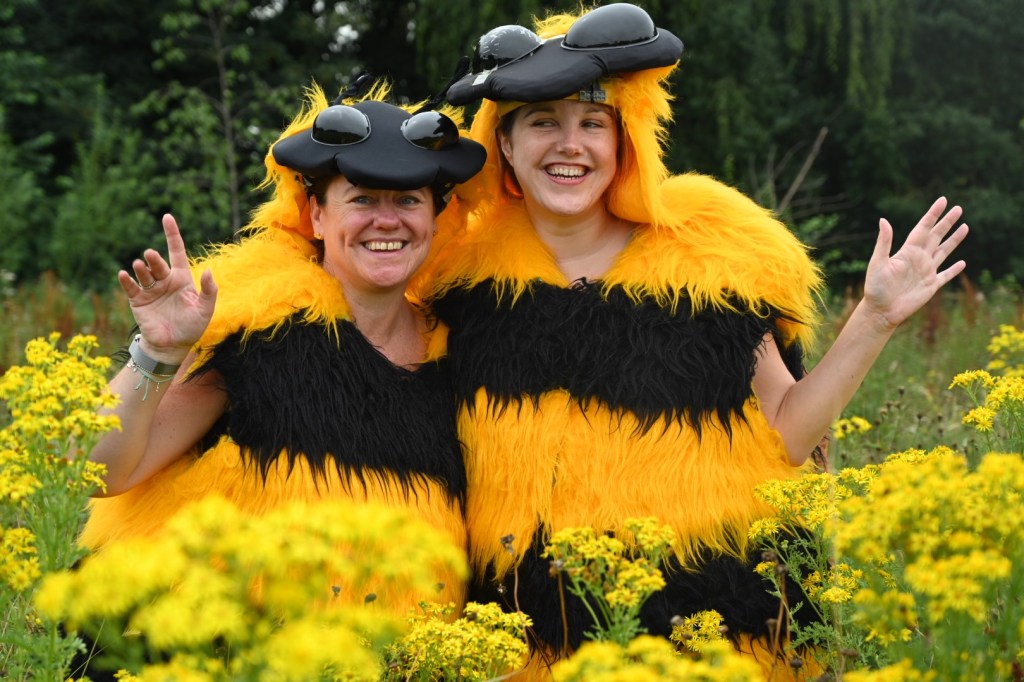
I campaigned tirelessly over many years as Friends of the Earth for a ban on the use of Neonicotinoids. You could often find me dressed as a bee asking people to sign up residents to ask the government to bring in the ban.  The ban was put in place in 2018 (I still wore the bee suit though) But we have a big BUT….

Why is there always a but…?

Since the ban, the government has allowed the use again in January for the fourth year running under emergency authorisations.

As ever in the UK we just put out fire after fire, we never look to see how the fire could be prevented.

Our Social Media Manager, Angharad Armson an enthusiastic beekeeper provided information on the plight of our bees to our Chester MP last month. Samantha Dixon led a Westminster Hall Debate on the Environmental impact of neonicotinoids and other pesticides following the approval of it’s use.         

Do watch this – Parliamentlive.tv – Westminster Hall

Angharad was mentioned in the Parliament debate including this information. “Bees and other pollinators have for many years been facing an increasingly difficult task with changing agricultural practice. The Expert Committee on Pesticides stated in their report “There is new evidence regarding the risk from neonicotinoids globally which adds to the weight of evidence of adverse impact on honeybee behaviour and demonstrated negative impacts on bee colonies.”

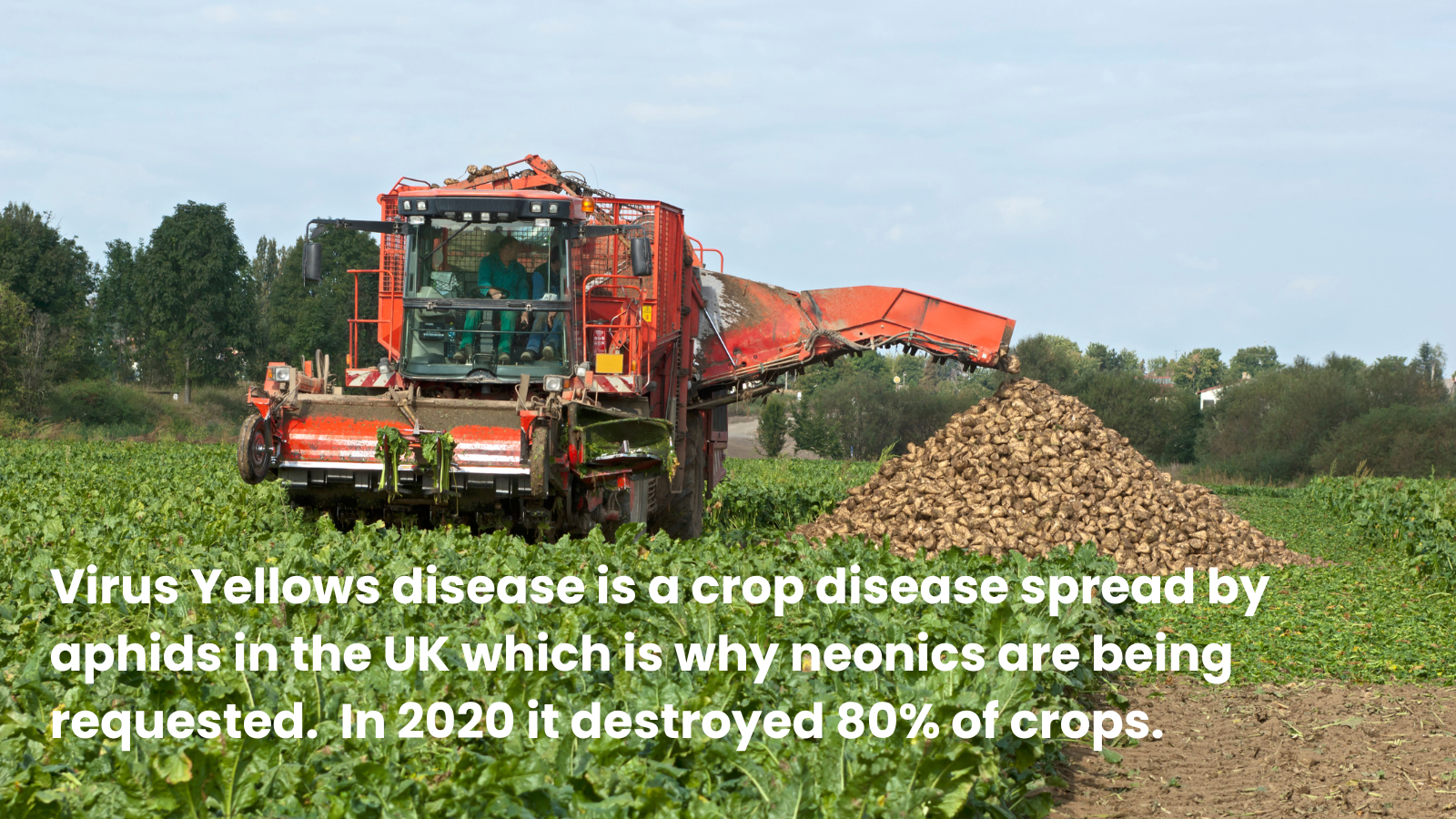
British Sugar is the company that recently asked the UK Government to lift the ban to use neonics. on sugar beet crops. British Sugar is the sole buyer and processor of UK-grown sugar, but currently the company provides no way for beet farmers who choose not to use neonics, to market their sugar as neonic-free. And as consumers, we also have no way of knowing if the sugar we buy is affected. 

Please sign The Wildlife Trusts Petition to ask British Sugar to help more farmers go neonic-free.

Read more from The Wildlife Trusts here – Say No to Neonics | The Wildlife Trusts

From listening to the debate, I felt it was important to remind ourselves that this issue isn’t just about protecting honeybees and beekeepers but our fruit and vegetables.

Which is more important UK sugar or our wider food crops?

It is generally solitary bees such as mason bees and leafcutter bees, which are critical to growing food and flowers. Nearly 35% of the food the world depends on requires animal pollinators, like bees to reproduce.  But bees not only pollinate our food, but they also help plants and trees grow which is vital to clean, breathable air. Unfortunately, bees are under attack from pesticides and climate change. Last year, beekeepers reported that 45% of their hives died. If bee colonies continue to collapse, what kind of world would that leave?

It is so important we say no to the use of these pesticides.

Would we starve without bees?

“I don’t see how we can be in the 4th year of an emergency” – well said I say. I do not know which MP it was that said that, but I also agree.

Image below from this BBC webpage Would we starve without bees? – BBC Teach

Let’s talk Dirt(y)

Helen Chambers, Director, Eco Communities

When attending a viewing of Six Inches of Soil this week at the new Picturehouse Cinema, I didn’t know what to expect, but I was interested to see what I could learn, and I’m glad I went.

The film followed three young farmers moving away from intensive farming methods and instead using versions of regenerative farming practices.
It reminds us of the fantastic and essential work that soil does in keeping the global population alive. But how the way we farm the land currently has been degrading it and removing the nutrients. With some experts estimating there are only 40 harvests left if we continue to manage the soil in the way we have, it does sound like we need to do something drastic.
The young farmers showed that it didn’t take long for the soil and land to start to regain its nutrients and that although there is a lot of trial and error the products produced can be as good if not better than using traditional methods.

The most surprising thing to me, having worked in carbon footprints, was the ability to significantly reduce the impact on the planet of beef production.
The Livestock farmer Ben Thomas had a herd of cows which fed off a new field each day and one roll of hay. Due to the way he managed the herd and the land, a carbon expert estimated the farm as carbon positive, despite at the time the farm only having cows, one of the biggest carbon contributors to a Western diet.

My favourite part of the film was watching the cows being led into a woodland for the first time to graze and seeing them scratching themselves against all of the trees and foraging on the branches.

Adrienne Gorden reminded us that it is not cheap or easy setting up from scratch, and finding a route to market for small producers is really tough.

Although I avoid supermarkets as much as possible and only go for things I can’t buy locally, it did remind me that there is more I can do in seeking out food markets and market gardens. It also reminded me that I have a garden of my own and I should be giving it a go growing my own veg, especially to teach my kids where their food is coming from.

Anna Jackson and her Dad showed us what the power of a book can do. Annas Dad has read Dirt to Soil by Gabe Brown and had started a journey on his farm to use less pesticides and less intensive methods. At the same time Anna moved back home and started working part time on the farm. She had never been inspired to do so before, but seeing her Dad making changes that benefited the planet she felt that it was something she could get involved in for the first time. It was clear throughout the film that Anna wanted to move at a faster rate into organic or regenerative farming and her Dad at a slower rate but it was really heart-warming to see them both on the same page and working as a team with the same goal, to protect the planet for future generations.

Following the viewing of the film we were lucky to have panel at the end comprising of Riverford veg, The Grosvenor estate, a Dairy farm vet and the films producer.  It was a really interesting discussion highlighting that it is often the farmers that are seen as villains, but they are just trying to feed us and need to keep their farms profitable.  It also highlighted that Government and policy plays a vital part for farmers being able to move into more regenerative practices (although the term is not universally loved) and anything individuals can do to push and support these policies is vital.

Asking the question to the panel if there is anything we can do to support this there were three key areas:

  1. Educating our youth on where the food comes from and how vital it is to grow it in the right way.
  2. Where we can putting out money into locally grown food, that is grown with the planet in mind. Sharing great producers and sellers with friends and family where we can.
  3. Supporting locally in Chester with the Food for the Planet project by supporting the businesses signed up to the pledge and speaking to venues who would be interested in learning more.

There is more information about the film at www.sixinchesofsoil.org.     

From Litter Picking in Hoole to our first Certified Food for the Planet businesses.

February started with an early People Planet Pint. Some of the team spent the day at the Business for Good Festival by UK for Good.

The Sykes Holiday Cottages team were happy for our Sustainable Cheshire Cup to be part of the day, which was used by anyone who forgot to take a reusable cup. Then a fantastic evening at That Beer Place for PPP.

We then litter picked in Hoole, headed by our founding directors Christian & Helen T, a great pick in Hoole and drinks in The Locke Vaults after.

We formally launched our Food for the Planet project, with funding supported by Cheshire West Voluntary Action. Angharad’s has been busy creating lots of flyers and lettering businesses and community based food businesses in the region.

All we wanted was for businesses to register for one of the listed items, but we already have four businesses that are taking more actions and

two who are now fully certified as Food for the Planet accredited, Fika and Fish & Chips at Weston Grove.

Helen C joined this month’s Cooperative Member Pioneer event, at Hoole Community Centre when again our Cheshire Cup saved the day from single use cups.

Frodsham Town Council are now actively working on actions to ensure they are the next Plastic Free Community in Cheshire with our help.

More to come….

March starts with us at the Storyhouse Women Weekend, Helen T will be on the Saturday 12 pm panel talk, Why Empowering Girls and Women Means Better Climate Solutions she then rushes off to start her Sustainable City Tour and introduce you to some of our Sustainable businesses and projects.

Angharad is supporting her home Neston with a community litter pick on the Sunday.

Then we can now announce we will be back in Grosvenor Park in June. Who’s joining us to be part of Great Big Green Week this year, we are looking for organisations to join us in Grosvenor Park 15th and 16th June….? Email office@sustainsblecheshire.uk

Interesting in linking into any projects we are involved in then email helentandy@sustainablecheshire.uk

Thanks for reading…..

The Food for the Planet Pledge

In today’s world, making informed food choices is more crucial than ever. A healthy diet, coupled with the practice of shopping locally and seasonally, not only benefits our personal health but also contributes to a sustainable environment. This article explores the intricate link between healthy eating, local shopping, food costs, and a climate-friendly diet, emphasising how these elements together foster a sustainable lifestyle that benefits both individuals and the planet.

Healthy eating and its benefits

A healthy diet is foundational to overall health, comprising a variety of foods that provide essential nutrients. Eating a balanced mix of fruits, vegetables, whole grains, and lean proteins can prevent chronic diseases, enhance well-being, and boost energy levels.

The Value of Shopping Locally

Shopping locally supports smaller businesses and often reduces the miles your food has travelled. Going into a local Greengrocers they will often know the producers. You can also sometime purchase from local farmers via veg box schemes. These actions strengthen local economies but also ensures that the food on your plate is fresher and more nutritious.

Understanding Food Costs

One common misconception is that healthy and sustainable eating is inherently more expensive. However, thoughtful choices and shopping practices can make such a lifestyle accessible on any budget. Eating less meat and processed food and more vegetables, pulses and grains can reduce costs. Shopping where items are not pre-packaged in numbers but where you can choose your own amount can also mean you waste less and only pay for what you need.

A Climate-Friendly Diet: Making the Connection

Adopting a climate-friendly diet involves more than just personal health benefits; it’s about making choices that have a lesser impact on the planet. By prioritizing plant-based foods and reducing meat consumption, individuals can significantly lower their carbon footprint. A beef burger for example has a carbon footprint 30 times that of a plant based one.

As well as individuals making more conscious choices, it is also the responsibility of businesses serving food to ensure they are helping people to make planet friendly, healthy choices that support the local community. That is were the Food for the Planet comes in. Businesses can pledge to follow simple actions, offering a more sustainable menu and supporting the climate and food crisis.

Who can take the Food for the Planet Pledge?

Businesses that serve or sell food can take the Food for the Planet Pledge. This is a menu of commitments. We are looking for a business to commit to just one of the mandatory for now and complete the process by 2025.

As a business you might already be paying the Living Wage or selling verifiably sustainable fish. If you are a plant-based restaurant or setting – you already meet the two mandatory commitments. You will then just need to select four other commitments to complete by 2025.

 Please get in touch with any questions office@sustainablecheshire.uk or use the link below to get started.

Sustainable Eating: A Win for Businesses and the Planet


In Cheshire, a quiet revolution is unfolding on dinner plates and in business strategies. More people are turning towards sustainable eating, not just as a trend, but as a lifestyle choice. This blog explores why embracing this shift is vital for local businesses and how the Food for The Planet Pledge can be a game-changer.

Why More People are Choosing to Eat More Sustainably
The rise in sustainable eating is fueled by increased environmental awareness, the undeniable health benefits, and ethical considerations. In Cheshire, a growing segment of consumers are actively seeking out eateries and food suppliers who prioritize the planet. This shift is not just a fad; it’s an emerging market reality.

Sustainable food trends among 20 to 40-year-olds indicate a preference for locally sourced, organic, and plant-based options. This demographic values environmental responsibility and ethical practices. Retailers should adapt to these trends to meet consumer demands, enhance brand image, and contribute to global sustainability efforts.

In Price Waterhouse Coopers research in June 2023 that asked consumers how much above an average price they’d pay for a variety of different goods, such as locally produced food at a farmers’ market, products manufactured with a lower carbon footprint and custom-made, or bespoke, items. Overall, eight out of ten consumers say that they would pay more: more than four in ten say they’d pay up to 10% above average, one in ten say they would go up to 30%, and nearly 7% say they would pay even higher prices. Millennials and gen Z, who typically espouse social consciousness and environmental justice, were the most open to spending more for the sake of sustainability. So now is a great time to use this information in your business to gain an edge over the competition.

The Benefits of Sustainable Eating
Sustainable eating isn’t just good for the planet; it’s smart business too. Environmentally, it means a significant reduction in carbon footprint and more efficient use of resources. Economically, businesses that adapt to this trend tap into a burgeoning customer base. They also position themselves for potential long-term cost savings by adopting more sustainable practices.

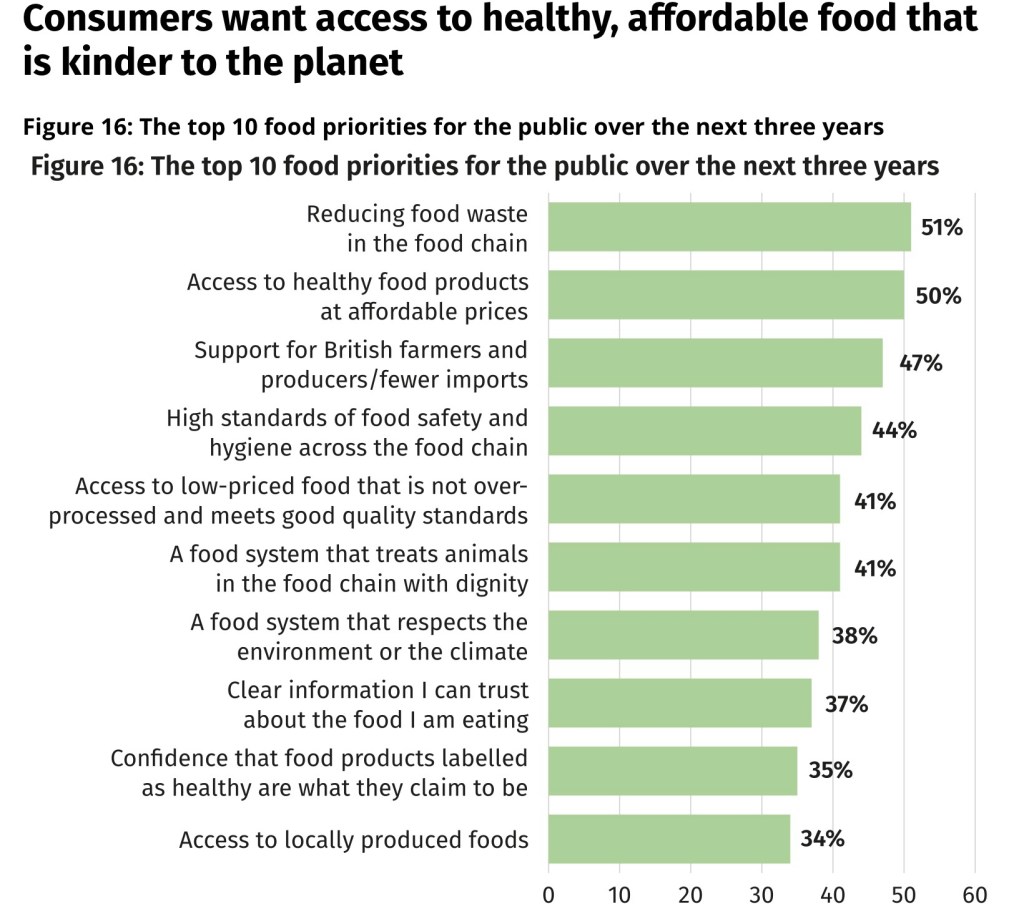
The above is taken from https://www.food.gov.uk/our-work/chapter-1-the-nations-plate-our-diet-and-food-choices-today#revision-log

What The Food for The Planet Pledge Is
The Food for The Planet Pledge is an initiative that encourages businesses to commit to sustainable food practices. It’s a statement to your customers that your business cares about the future of our planet and their health. By signing up, Cheshire businesses can lead the charge in making food consumption more planet-friendly.

Conclusion
The call for sustainable eating is getting louder in Cheshire and beyond. For businesses, signing the Food for The Planet Pledge isn’t just a moral choice; it’s a strategic move to attract a rapidly expanding customer base that cares deeply about the planet.


Food for the Planet is a national accreditation scheme that encourages businesses and community groups to pledge towards sustainable food practices. The overriding Sustainable Food Places project, brings together your local council, individual residents, businesses and community organisations. With the aim of improving our local food system whilst also reducing our community’s impact on the wider environment.

Eco Communities are working with Cheshire West Voluntary Action and Cheshire West and Chester Council to roll out the Food for the Planet project in the region. The Food for the Planet Pledge is a menu of commitments to choose from to ensure that the food you serve is freshly prepared, local, seasonal, and supports the local economy.

To start, you are asked to just select one mandatory commitment to start from:

  • We have reduced the amount of meat and dairy served by at least 25%
  • We source at least 25% of meat and dairy from higher welfare, more environmentally

You can then work with us to complete the remaining pledges which we ask you do by 2025. You might be doing some of this already, for example running a plant-based business, paying the Living Wage, or selling verifiably sustainable fish. If so, that’s great, you can count that on the form.

By taking the Planet Pledge, you will be joining a community of UK food businesses who are committed to serving meals that are better for people and nature.

We would love for you to show your support by adding the name of your organisation to the pledge – HERE. Don’t hesitate to drop me an email or contact me via social media if you would like to discuss the project or need any more information.

What will the key sustainable trends of 2024 be?

While everyone is talking about New Years Resolutions and Veganuary, I was just working on getting going again after the Christmas break, so you won’t hear any suggestions about what you should be doing here.

I try to always be positive and create actions for change, but I found 2023 a really difficult year from all the 20 years in Climate Activism. We all know the news needs to report the doom and gloom and needs to sensationalise everything. I found the news quite difficult to keep on top of during 2023. One thing that was at many of our doorsteps (or at the bottom of our gardens) in 2023 was flooding. My lovely garden office flooded three times to the extent I have had to move into the box room. Which has still thrown me off my kilter four months later. I found looking into my garden and the birds on the feeder hugely inspiring and now I just wish for a time I can move back in without fear of wading around my garden in my wellies trying to save it using a water pump. I feel hugely grateful that it was just my garden and feel for anyone who has suffered flooding of their homes. I send you a huge hug.

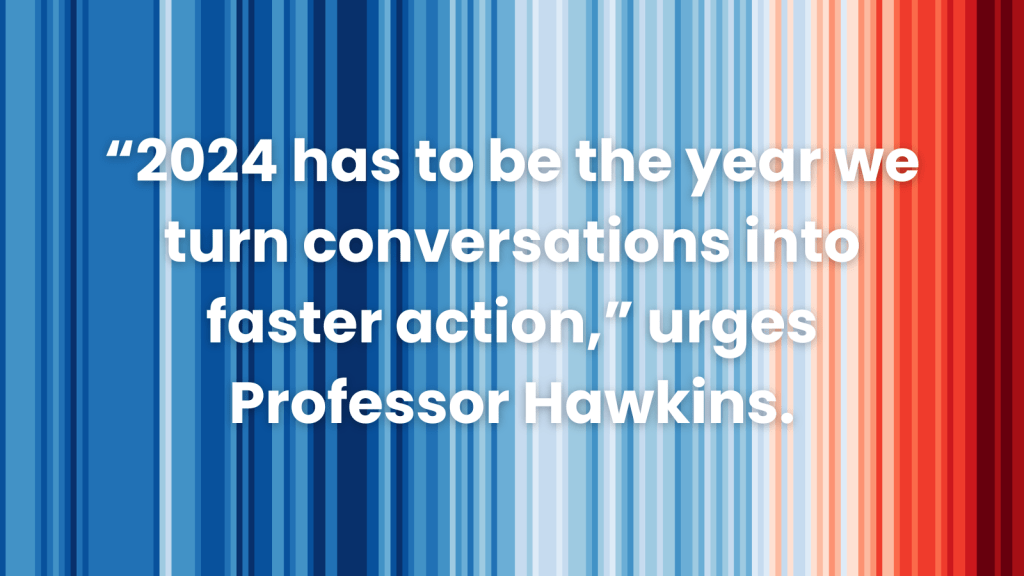
You might have seen this on image on tea towels and scarves, but did you know that the temperatures were so high in 2023 that the red is getting darker and darker.

Created by scientist Professor Ed Hawkins at the University of Reading, UK in 2018 as a means to show increasing global temperatures without words, numbers or graphs.

The series of vertical coloured bars offers a visual representation of how our planet is progressively heating up. Reports are expected to show that 2023 was more than 1.5C above pre-industrial records. Read more on Climate Stripes LINK

The good news is that we already have many of the solutions we need,” he adds. “We now need bold, transformative change across all parts of society to make our planet’s climate safer for current and future generations.” Professor Hawkins.

We will be looking at a few key sustainable themes over the next few weeks and we hope you will follow us and engage on our journey with us.

We will be looking at:

  1. The way we eat (Sustainable Food)
  2. The way we live (Sustainable Living, circularity, fashion and more)  
  3. The way we manage our money (Sustainable Money)
  4. The way we travel (Sustainable Travel)

What do you think the main trends around sustainability will be in 2024? What do you want to read more about/ do more about/ listen to more information on? 

Why not tell us via the google form at the bottom of the blog.

An insight into some of the trends we think are important and will be expanding on are:

Sustainable Money – the money we put aside – whether through workplace pensions, savings or even just in day-to-day current accounts – is busily shaping our future. Often our money is being used to fund activities we would never dream of supporting directly: fossil fuels, exploitation of women and girls, weapons. I am going to be working with small groups over 2024 where we will all make sustainable changes with our money. You don’t need to have savings to make a difference, just changing where you bank can have an impact. Why not find out more via my webinar on the 16th January, 7pm online. BOOK HERE

Sustainable Fashion – the European Parliament is expected to formally adopt new legislation including ban on the destruction of unsold textiles and footwear products; requirements around the durability, reusability and reparability of products; and the introduction of digital product passports that will help offer more transparency about how items are made and their environmental impact. On-demand fashion, dyes to become more eco-friendly are both to rise and the use of new fibres such as seaweed. Read more via Vogue – LINK

Sustainable Food – great news for the plant based community. The Sustainable Restaurant Association believes 2024 will see a bigger focus on dishes made from whole foods like beans, pulses, tofu and tempeh, mushrooms, nuts and seeds, rather than highly processed alternatives with long ingredient lists. Better Kids menus and a focus on Circularity are all mentioned in this article. This should be a great time to launch our Food for the Planet project which asks businesses that serve food to consider more plant based and local produce within its menu’s.

What do you think the main trends around sustainability will be in 2024? What do you want to read more about/ do more about/ listen to more information on? Why not tell us via the basic form below.