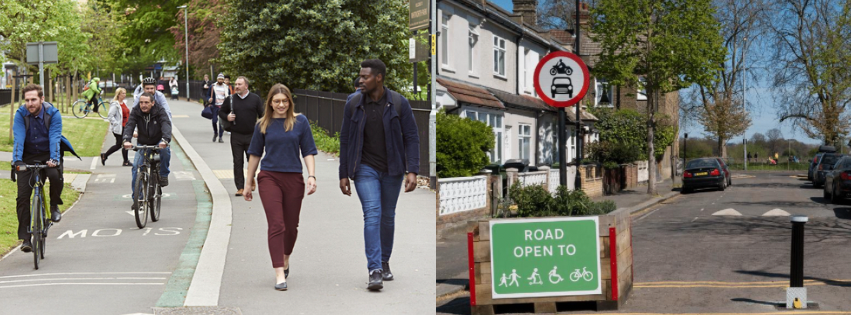
Active travel means getting from A to B using your own energy, most commonly by walking, wheeling, or cycling.
It includes:
Walking (e.g. to school, shops, work) Cycling (including e-bikes) Wheeling (wheelchairs, mobility aids, scooters)
Unlike driving, active travel is powered fully or partly by human movement, rather than fossil fuels.
What counts as Active Travel?
Active travel is part of everyday life — not just exercise.
Examples include:
– Walking to the shops instead of driving
– Cycling to work or the train station
– Taking children to school on foot or by bike
– Using a wheelchair or mobility scooter for local journeys
Most everyday trips are short — often under 5 miles — making them ideal for switching to active travel
Around 60% of car journeys in England are under 5 miles — a distance that could often be walked, wheeled or cycled.
🌍 Why does active travel matter?
Active travel plays a key role in tackling some of today’s biggest challenges:
🌱 Climate change
Transport is a major source of carbon emissions. Choosing to walk or cycle helps reduce reliance on cars and lowers pollution.
🫀 Public health
Regular movement improves physical and mental wellbeing, helping prevent conditions like heart disease, diabetes and depression.
🏘️ Better places to live
Fewer cars mean:
Cleaner air Safer streets Quieter, more attractive neighbourhoods
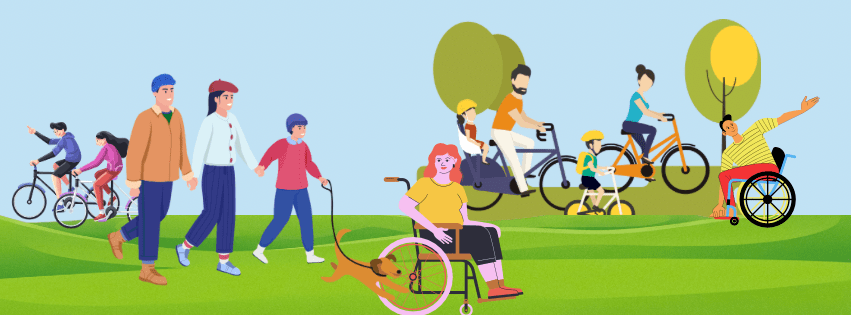
The benefits of active travel
💚 Health and wellbeing – active travel builds physical activity into daily life, improving fitness and mental health.
💷 Saving money – walking is free, and cycling is far cheaper than running a car — helping households cut transport costs.
🌍 Lower carbon footprint – replacing short car trips with walking or cycling significantly reduces emissions.
🤝 Stronger communities – more people on streets creates safer, more social, and more inclusive places.
🚗 Less congestion – fewer car journeys free up road space for those who need to drive.
🔄 Active travel and the circular economy
Active travel fits naturally with circular economy principles:
– Use fewer resources (less fuel, fewer materials) – Reduce waste and emissions
– Design healthier, more efficient systems
Just like the circular economy rethinks how we produce and consume, active travel rethinks how we move — shifting from high-impact systems (cars) to low-impact ones (people-powered travel).
👣 What you can do?
Small changes make a big difference:
– Walk or cycle short journeys
– Combine active travel with public transport
– Plan routes using quieter streets or cycle paths – Encourage schools and workplaces to support active travel
Physical inactivity is linked to 1 in 6 deaths in the UK — and active travel is one of the easiest ways to build movement into daily life.
Cheshire West & Chester Cycling and Walking Infrastructure Plan
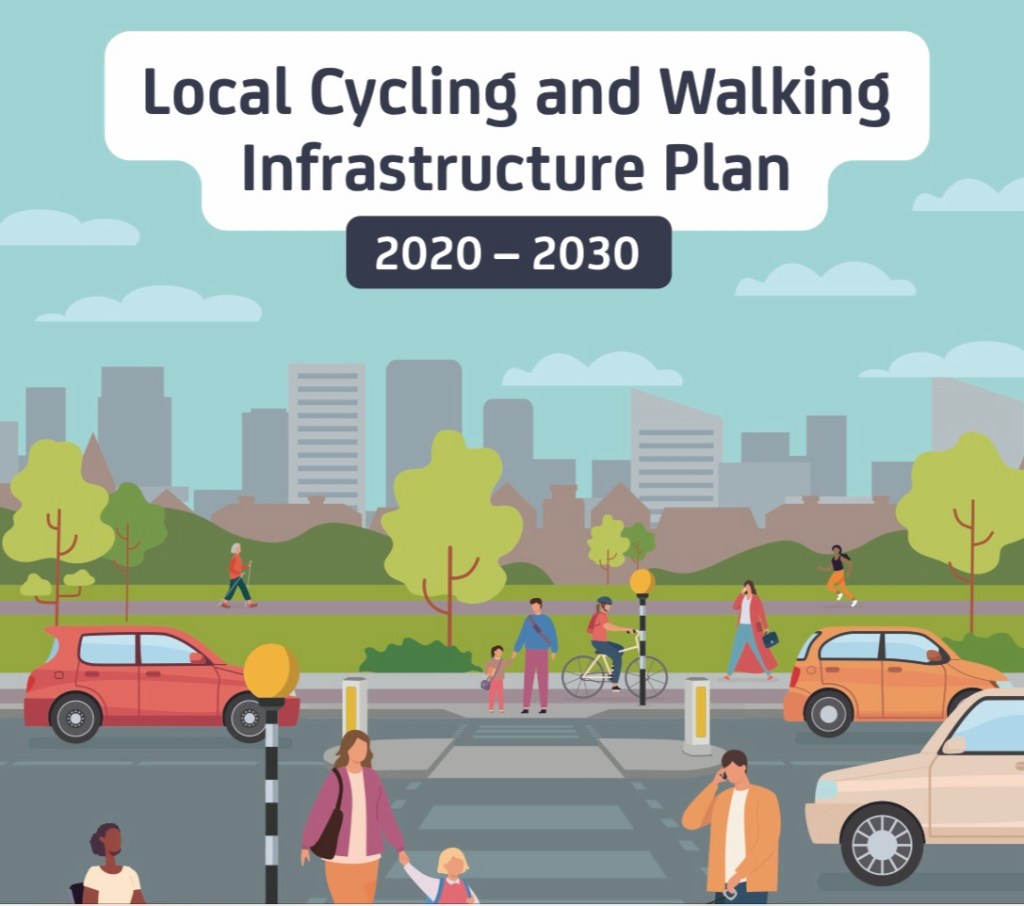
Read report – Click Here
 Sustainable Cheshire by Eco Communities