A Community-Led Circular Economy Programme for the One City Plan
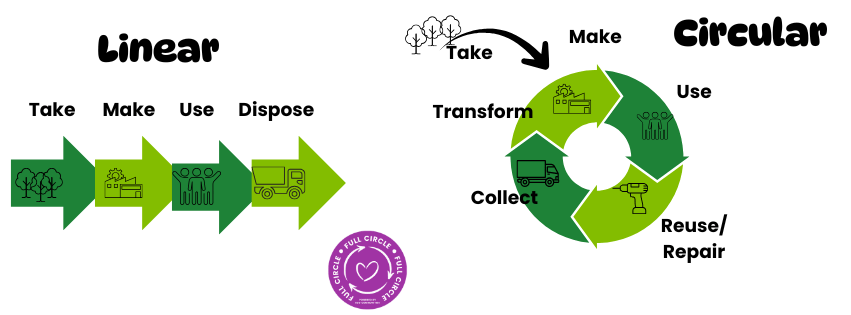
Circular Chester is a practical, community-led programme designed to deliver circular economy outcomes within the Chester One City Plan.
It focuses on visible, high-impact projects that reduce waste, support local businesses, and engage residents, while aligning with council priorities on sustainability, cost of living, and net zero.
Our Vision
To make Chester a leading circular city, where:
– Resources are reused, repaired, and shared
– Waste is designed out of everyday life
– Local people and businesses benefit economically and socially
Strategic Fit
Circular Chester supports key themes within the One City Plan:
– Net zero and climate action
– Sustainable city centre
– Community participation and wellbeing
– Inclusive economic development
Eco Communities will act as the community delivery partner, activating residents, businesses, and local organisations.
Core Programme Areas
Reuse (inc. Share) Refill,& Repair Network
Flagship Project
A city-wide initiative to normalise sharing, refill, repair and reuse.
Key elements:
– Monthly city-centre Refill, Sharing, Reuse & Repair Events
– Network of pop-up circular events in communities
– Partnerships with schools and volunteers
– Exploration of a future “Circular Hub” space
Outcomes:
– Reduced waste
– Increased skills and volunteering
– Strong public visibility
Circular Business & Energy Support
Supporting local businesses to reduce costs and carbon. Delivered in partnership with Chester Community Energy and others.
Key elements:
– Energy audits and efficiency upgrades
– Low-energy lighting and solar advice
– Promotion of circular business practices
– Case studies of local green businesses
Outcomes:
– Lower business energy costs
– Reduced emissions
– Access to grant funding
Green Events Standard for Chester
A simple framework to reduce environmental impact of events.
Key elements:
– Waste and recycling standards
– Reduction of single-use materials
– Clear responsibilities for organisers
– Pilot at key events (e.g. Green Weekend, Festival of Ideas)
Outcomes:
– Cleaner public spaces
– Reduced event waste
– Increased public awareness
Notes:
Influences multiple events.Visible public impact & Scalable
Include: waste management requirements recycling systems no single-use plastics responsibilities for organisers
Community Engagement & Storytelling
Connecting people to circular economy action.
Key elements:
– Community video storytelling (cinema, online)
– School engagement and youth voice
– Public campaigns (repair, reuse, low waste living)
– Integration into city events and festivals
Outcomes:
– Behaviour change
– Increased participation
– Stronger community identity
Measures of Success
– Number of circular living events and participants
– Volume of waste diverted from waste
– Number of businesses supported
– Energy and carbon savings
– Community engagement levels
Partnerships
Key partners will include:
Role of Eco Communities
“We don’t build infrastructure—we activate people, businesses, and places to deliver it.”
Eco Communities will:
– Lead delivery of community-facing projects
– Coordinate partners and volunteers
– Drive engagement and communications
– Act as a bridge between council strategy and local action
Next Steps
– Agree 2–3 priority workstreams with council
– Map programme to specific One City Plan actions
– Secure initial funding and endorsement
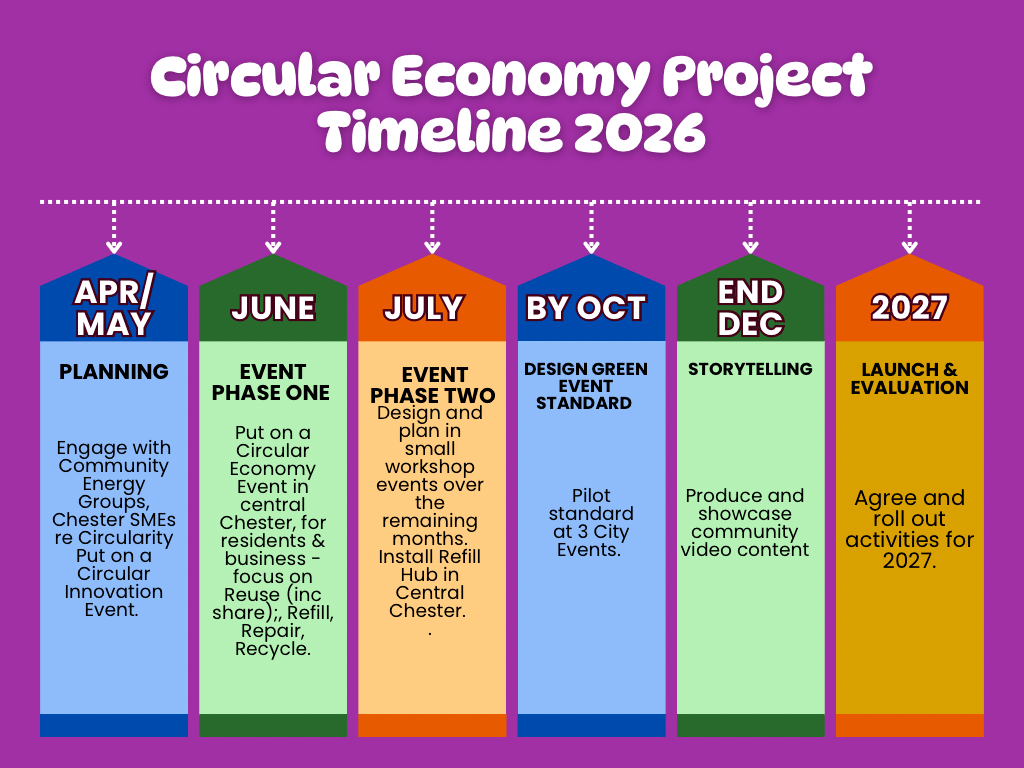
– Launch pilot projects (Summer–Autumn phase)
Circular Chester offers a practical, visible way to turn strategy into action, placing communities at the heart of Chester’s transition to a sustainable, low-carbon future.
Circular Models
1. Brighton & Hove City Council
One of the UK’s leading circular economy models
What they have:
Circular Economy Routemap & Action Plan (2025–2030/35) Embedded across: housing planning procurement transport economic development
What it actually looks like:
Instead of a single project, it’s a whole-system approach:
1. Waste → Resource mindset
Focus on waste prevention first, not just recycling Targets around reuse, repair, and reducing consumption
2. Repair & reuse infrastructure
Support for repair initiatives and reuse networks Encouraging sharing, second-hand markets
3. Circular business growth
Helping local businesses adopt circular models Innovation + green jobs focus
4. Council leading by example
Circular procurement (buying repairable, durable goods) Applying circular principles to new housing builds
It’s not just “projects”—it’s a framework that connects everything.
🌍 2. Malton and Norton (with council backing)
Community-led circular economy
What they have:
A town-wide circular economy initiative
What it looks like:
1. High street circular hub
Repair, reuse, upcycling, preloved goods, physical presence in town centre
2. Behaviour change at scale
Residents actively engaged in reuse culture Over 1,100 items diverted from waste
3. Linking to energy & business
Plans for: food waste → energy circular business park Supporting local economic growth
Repair Café + high street presence Community-led, not council-heavy
🏙️ 3. ReLondon
City-scale circular economy programme
What they have:
City-wide circular economy strategy Strong partnership model (boroughs + business)
What it looks like:
1. Sector-based approach
Focus on: food textiles built environment plastics
2. Business support
Funding + advice for circular startups Scaling reuse / sharing models
3. Behaviour change campaigns
Public-facing initiatives (repair, reuse, sharing)
Combines economic development + behaviour change
🏛️ 4. National / Combined Authority Guidance (2026)
From UK government guidance:
What councils are now expected to include:
Repair and reuse services expansion Second-hand and sharing schemes Product life extension Circular business models Social value + cost of living benefits
Circular economy is now seen as:
economic strategy + social policy—not just waste
🔧 5. What Circular Economy Plans Typically Contain
Across these examples, most council plans include 5 core components:
1. 🧭 Clear Vision + Targets
Reduce waste (often aligned to national targets) Net zero links Economic + social benefits
2. 🔁 Practical Programmes
Usually 4–6 key workstreams:
A. Repair & Reuse – Repair cafés reuse hubs sharing libraries
B. Circular Business Support – Grants / advice for local businesses energy + materials efficiency
C. Sustainable Procurement – Council buys: repairable durable reusable goods
D. Built Environment – Circular construction reuse of materials
E. Behaviour Change – campaigns, schools & community engagement
Place-Based Projects – High street hubs community spaces pilot neighbourhoods
Partnerships – Council + community groups + businesses Universities often involved
Metrics – Waste reduction reuse rates carbon savings jobs created
 Sustainable Cheshire by Eco Communities